


Jeep’s AI-Powered Ads Signal a Pivotal Shift in Automotive Marketing
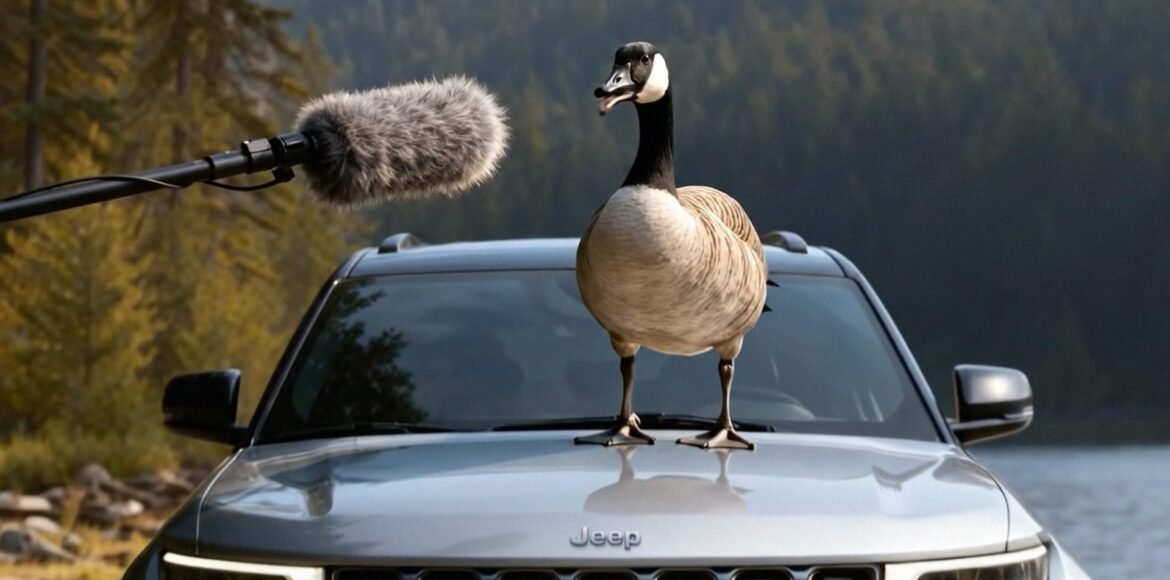
What happens when a bear pokes its head through the window of a Jeep Grand Cherokee and starts delivering a product review in perfect sync? In Jeep’s latest campaign, this isn’t a dream—it’s artificial intelligence hard at work. With surreal visuals, talking animals, and morphing vehicle animations, Jeep has become one of the first major automotive brands to embrace AI-generated content at scale in its marketing efforts.
The campaign, dubbed “Wild Thoughts,” was developed in collaboration with Chicago-based Highdive Studios and its sub-brand, 1986 Studios. It leverages cutting-edge generative AI tools to craft imaginative, visually gripping narratives that are designed to entertain—and sell. The result is equal parts cleverly bizarre and strategically progressive.
Why AI? Efficiency Meets Vision
As digital ad budgets tighten and expectations for creative output climb, AI offers a compelling trade-off: faster production, lower costs, and near-limitless imagination. Jonas Wagner, managing director at global consulting firm AlixPartners, underlined that automotive marketing is overdue for an AI revolution. According to AlixPartners’ research, generative AI tools have the potential to reduce content development costs by as much as 60%, while collectively saving more than $7 billion annually for the auto industry.
From animated squirrels to hyperreal car evolution visuals, Jeep’s deployment of AI isn’t just experimental—it’s strategic. The brand’s identity as a thrill-seeking, off-road pioneer makes it well-suited to risk-taking, even when that means handing creative reins to algorithms. “You have to make sure that people instantly understand it’s AI, without a glaring disclaimer,” said Wagner. “Jeep nailed that balance.”
Creativity Enhanced, Not Replaced
One of the most frequent critiques of AI-generated creative content is its potential to displace human talent. But the team behind the Jeep campaign pushes back convincingly. Their approach melds AI automation with traditional expertise in editing, animation, sound design, and historical visual sourcing. The AI isn’t the creator; it’s the accelerator.
Ayalla Ruvio, associate dean of marketing at Michigan State University’s Broad School of Business, views AI in advertising not as a disruptor, but an evolutionary tool. “AI does not replace the human input—it makes it better,” she said. In Jeep’s case, the imaginative visuals reflect both brand DNA and marketing sophistication, she added. “Jeep is about adventure, risk, and progress. This campaign feels true to that ethos.”
While criticism of AI-generated ads often hinges on lost authenticity or lifeless imagery—as Coca-Cola recently experienced with a holiday spot—Jeep’s work has largely avoided such backlash. That’s in part due to humorous disclaimers like, “If you see a wild animal talking, call your doctor,” as well as visuals that lean into their artificiality rather than masking it.
Legal and Ethical Lines Are Still Forming
Despite the creative success, the legal and ethical frameworks around AI-generated advertising remain murky. There are no specific regulations governing how AI visuals must be disclosed, though advertisements—AI or not—must generally avoid misleading consumers. Jeep made clear in its campaign footnotes that animals were fictionalized and visuals were AI-generated.
For Stellantis Chief Marketing Officer Olivier Francois, the creative potential of AI is compelling. He’s even used AI to replicate the voice of his late friend and iconic voiceover artist Kevin Yon, with family permission, for a recent Stellantis ad. “Thanks to AI, you can use real animals—that aren’t real. They’re not fake either; they’re trained on thousands of real images,” he said.
And while the future could see more sophisticated AI take on larger marketing roles, Francois remains unfazed. Managing the creative direction for 14 major car brands goes beyond the current capabilities of any algorithm. “For now, it would be hard to do that with AI. Maybe one day it’ll be feasible.”
Jeep’s campaign reinforces a broader industry shift: AI is not just the future of automotive advertising—it’s already here. Brands that align their identity with emerging technology stand to not only cut costs but also redefine consumer expectations in the digital age.
As generative models evolve, brands across sectors—from SaaS platforms to e-commerce—can take a page from Jeep’s playbook: blend human creativity with generative horsepower, and never lose sight of the brand story.
Jeep’s execution of AI-enhanced marketing stands as a blueprint for tech-forward storytelling. At DevSparks, we see growing demand from startups and enterprise clients alike for smart integrations of generative AI across brand content, web platforms, and product experiences. Success lies in merging innovation with narrative soul—something we specialize in when building AI-powered solutions that don’t just function, but resonate.