


AI in Advertising: How Artificial Intelligence Became the Engine of Modern Marketing
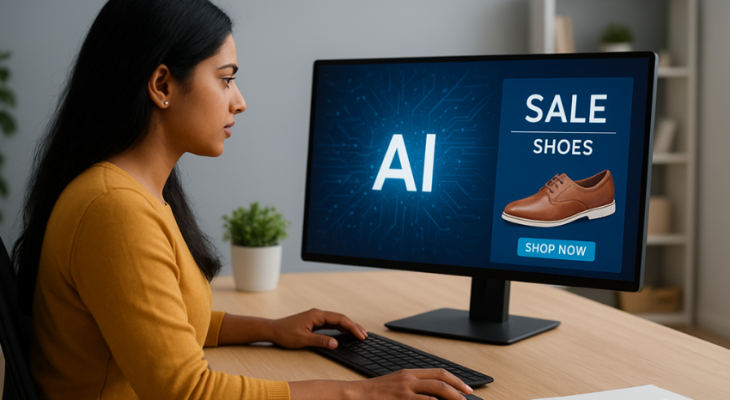
Just over a decade ago, digital advertising was painstakingly manual. From keyword selection to A/B testing, every optimization required human effort and intuition. Fast forward to today, and artificial intelligence has upended the old playbook completely. Algorithms can now generate creative variations, refine audience targeting, and reallocate campaign budgets in real time — often with minimal human input. What was once a buzzword has quietly become the backbone of digital marketing.
**The Rise of Smarter Systems**
AI didn’t enter advertising with a flash. It arrived incrementally — first as rule-based automation, then evolved into machine learning, and today, it’s deep learning enabling hyper-personalized campaigns. Unlike static tools of the past, modern AI systems continuously learn from each user interaction, adapting tactics based on live performance feedback. This has shifted the industry’s focus from traditional metrics like CPMs and clicks to predictive modelling, conversion intelligence, and real-time personalization.
According to a 2024 Deloitte Digital report, over 84% of global CMOs have embedded AI capabilities into their workflows. In India, the adoption rate is rising even faster, accelerated by the complexity and diversity of its market. From micro-markets to language barriers, AI is enabling marketers to address India’s unique challenges with scalable solutions.
**Localization at Scale: India’s AI Advantage**
In a country where audience identity shifts every few kilometers — linguistically, culturally, and behaviorally — personalization has historically been difficult and expensive. AI has reversed that narrative. Today’s systems are capable of identifying nuanced user behavior like a Chennai shopper’s preference versus a Chandigarh gamer’s engagement time, and adapt messaging accordingly.
This capability isn’t merely about efficiency — it drives inclusion. Campaigns that once struggled to resonate across India’s diversity can now be localized into multiple regional languages while retaining emotional resonance. AI is enabling marketers to deliver relevance at population scale, turning India into a showcase of digital agility rather than just digital maturity.
**AI as Creative Collaborator — Not Competitor**
The notion that creativity would be immune to AI influence has proven outdated. Rather than replacing human ingenuity, AI is augmenting it. Generative design tools and AI-driven programmatic platforms can create and test thousands of ad variants in milliseconds. Marketers can now focus less on manual iteration and more on strategic storytelling and emotional resonance.
In an ecosystem where creative testing used to require weeks of A/B analysis, brands can now iterate continuously — discovering what works, where, and for whom, in near real time. This shift doesn’t dilute creativity. It enhances it by transforming guesswork into performance-driven insight.
**From Reactive to Predictive Marketing**
AI’s transformative power lies in its predictive capabilities. Gone are the days when campaigns were reviewed post-mortem to estimate ROI. Today’s marketers use AI to forecast user behavior, anticipate conversions, and optimize spend proactively. Metrics like LTV (lifetime value) and churn probability are becoming the new pillars of marketing intelligence.
This is particularly advantageous for D2C India-based startups operating under tight margins — machine-powered decision-making allows them to compete at scale without the overhead of large analytics teams. With every rupee needing to deliver performance, AI acts almost as a virtual CFO — reallocating budgets, optimizing creatives, and upgrading efficiency in real time.
**Emotion Meets Automation**
Perhaps counterintuitively, one of the most powerful contributions of AI is humanization. Sentiment analysis, tone detection, and contextual understanding enable ads to do more than just sell — they can empathize. Knowing when not to serve an ad, or how to adjust tone dynamically based on user engagement, marks a pivotal shift: from simply marketing **at** people to connecting **with** them.
In India, where cultural nuance and timing drive consumer behavior, being relevant isn’t just smart — it’s respectful. AI’s evolving emotional intelligence now offers marketers a scalable way to embed empathy into campaigns, making interactions more meaningful across diverse consumer segments.
**Rethinking the Marketer’s Superpower**
As AI automates more of the tactical layer in advertising, it raises an important question: What is the role of the modern marketer? The answer lies in synthesis. Machines are remarkable at optimizing for performance, but they rely on human curiosity, ethics, and intuition to determine purpose.
In other words, while algorithms chart user journeys, it’s humans who ask the critical question: ‘Why should my customer care?’ In this new era, marketers must blend insights with ethics, storytelling with scalability, and automation with emotion.
**The Future Is a Feedback Loop**
AI won’t just reshape marketing workflows — it is redefining the very concept of scale. Traditional curves of diminishing returns no longer apply when AI continuously recalibrates campaigns in live environments. Reach, once counted in impressions, is now measured by access to personalized interactions. Creative fatigue is met with real-time refreshes. Spend is guided by models that optimize not only for today’s conversions but also for tomorrow’s impact.
As this dynamic engine drives forward, the most competitive teams will be those who don’t just use AI — they collaborate with it. They will align business strategy with model integrity, ensure responsible AI use, and focus on creating customer trust as much as campaign lift.
**From Buzz to Bedrock**
AI in advertising is no longer experimental tech — it is infrastructure. As the next decade unfolds, the key to success lies not in adopting AI, but in adapting entire marketing cultures around it. The best marketers will be part data scientist, part creative director, and part ethicist — always grounded in fundamental questions of audience intent.
AI helps answer those questions faster and more intelligently than ever before. But purpose, authenticity, and meaning remain in human hands. And that’s where the true artistry of modern marketing lies.
At DevSparks, we see the AI transformation in marketing as part of a larger trend — where automation, data intelligence, and scalable personalization converge to elevate user experience. Whether it’s building AI-integrated marketing platforms or optimizing SaaS workflows for performance-driven growth, our team is helping companies evolve from digital maturity to algorithmic agility.