


How Walmart’s Pop-Culture-Powered Holiday Strategy Rewrites Retail Storytelling
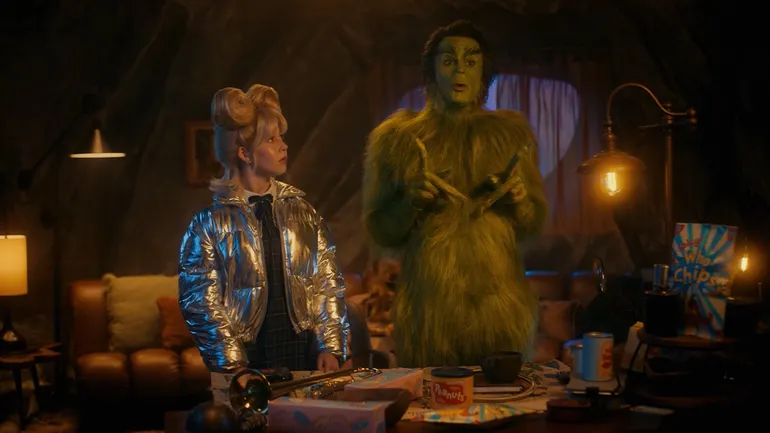
In today’s content-saturated ecosystem, standing out during the holiday marketing blitz requires more than discounts — it calls for imaginative storytelling fueled by cultural currency. Walmart’s latest campaign, a vibrant extension of its ongoing “Who Knew?” brand platform, leverages this idea by weaving a cinematic holiday narrative centered around the beloved Grinch character.
The campaign’s second phase, titled “WhoKnewVille,” deploys acclaimed actor Walton Goggins in the role of the Grinch. Goggins brings his signature charm and mischievous energy to a long-form ad where Mindy Lou Who, the campaign’s protagonist, persuades the reluctant Grinch to spotlight Walmart’s holiday value — from Black Friday steal-deals to the perks of Walmart+ membership. It’s not simply an ad, but a festive brand film that blends Dr. Seuss nostalgia with commerce-focused storytelling.
This campaign showcases how large retailers are evolving content strategies to meet changing customer expectations, favoring high-quality, emotionally resonant storytelling that drives brand affinity alongside seasonal shopping behavior.
**Long-Form and Platform-First**
The feature-style video, hosted prominently as a YouTube masthead, is central to Walmart’s push. Shorter cutdowns optimize format flexibility across digital and social platforms, aligning with audience consumption behaviors. Bolstering the effort’s cultural resonance, actor Stephanie Beatriz returns as the charismatic mayor of WhoKnewVille in an expanded storyline, reinforcing narrative continuity across campaign phases.
“Long-form content performs exceptionally well for Walmart,” noted David Hartman, Vice President of Creative. Data backs this, as prior campaign videos have garnered over 9 million YouTube views. The emotional equity derived from longer, serialized formats becomes especially useful during high-stakes retail windows like Black Friday, when differentiation is paramount.
**Integrated Storytelling Across Touchpoints**
Walmart’s campaign cleverly merges narrative with omnichannel execution. In a visual spectacle that commands urban attention, the Grinch takes over New York’s Times Square in a multi-billboard push promoting deals on consumer tech favorites like JBL speakers, Nintendo Switch 2, and Vizio TVs. At the same time, Walmart integrated campaign footage into NFL broadcasts — branching brand presence far beyond traditional digital confines.
The media strategy treats entertainment as a conduit for conversion, nudging users toward using the Walmart mobile app, exploring first-party eCommerce capabilities, and subscribing to Walmart+.
**Blending Whimsy with Business Goals**
While the Grinch himself may be up to his usual tricks, the Walmart strategy is anything but mischievous. Every element of the campaign carries dual intent — entertain while educating. Whether it’s showcasing speedy delivery through the antics of Max the dog, or converting sentiment to sales by placing gifts under trees, the message is clear: Walmart is not just affordable; it’s exceptional.
Publicis Groupe agencies Fallon, Leo NY, The Community, Contender, and Digitas co-developed the campaign in collaboration with Dr. Seuss Enterprises, reinforcing the power of cross-discipline creative consensus in modern brand storytelling.
**Changing Customer Perception**
“What we’re really trying to do is get customers to see Walmart differently,” said Walmart U.S. CEO John Furner. Highlighting depth in product offerings, digital service enhancements, and marketplace expansion, the campaign operates as a perception reset — especially for audiences comparing Walmart to eCommerce juggernauts like Amazon.
The trilogy of holiday promotional waves (early Black Friday, Black Friday week, and Cyber Monday) are scaffolded atop this unified story universe, creating serialized consistency that enhances customer recall and enriches brand equity.
**What this Means for SaaS and Tech Marketers**
Walmart’s execution is a masterclass in brand orchestration: emotionally charged content, channel-specific experiences, and behavioral alignment. For technology leaders, SaaS providers, or B2B platforms looking to humanize complex offerings, this campaign demonstrates the commercial impact of building a ‘world’ — not just a funnel.
Storytelling at scale, when bolstered by modular content types and AI-enhanced distribution, can create an ecosystem where brand becomes utility — and utility becomes irresistible.
As organizations lean into AI automation and connected platforms, campaigns like WhoKnewVille offer applicable blueprints for scaling narrative-driven performance marketing across interfaces and user journeys.
Walmart’s campaign exemplifies how modern marketing marries cultural relevance with platform-native storytelling — a strategy we believe every SaaS and tech brand can adopt. At DevSparks, we help companies design digital ecosystems where narrative, automation, and utility converge to produce measurable engagement and retention.