


What Brands Can Learn from Coca-Cola’s AI Holiday Ad Backlash
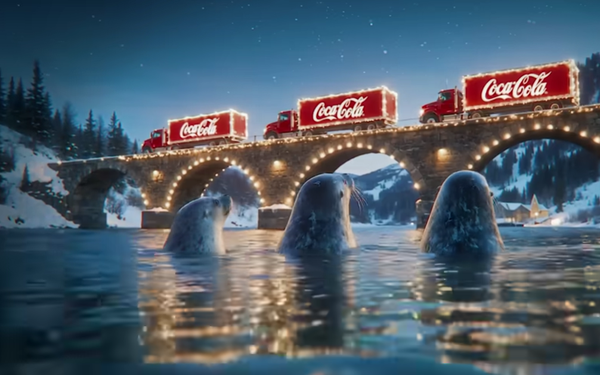
Two years in a row, Coca-Cola’s holiday campaigns have drawn backlash—not for their content, but for how they were created: with generative AI. Despite visual polish and faster production timelines, the company’s latest ad, a reimagining of its classic 1995 “Holidays Are Coming,” failed to resonate with audiences in the way that marketers and brand loyalists hoped.
This year’s version swapped out animated humans for animals in an attempt to sidestep last year’s criticisms, yet viewer skepticism persisted. Many online pointed out inconsistencies in elements like the iconic Coca-Cola trucks—subtle but significant deviations that undermined the campaign’s credibility. The larger issue? A perceived erosion of authenticity, nostalgia, and brand intimacy—core emotional triggers that holiday campaigns traditionally rely on.
“Even sophisticated AI animations can appear cold or impersonal if they overshadow storytelling and brand values,” commented Jeff Sherman, CEO of a leading marketing agency. His remarks cut to the heart of the debate: while innovation grabs attention, it must enhance—not replace—the emotional resonance of a brand’s identity.
AI’s Value Proposition vs. Audiences’ Emotional Expectations
From a production standpoint, the benefits of using generative AI are compelling. Coca-Cola’s CMO Manolo Arroyo told the Wall Street Journal they were able to trim their production timeline from nearly a year to just one month. The cost savings were notable, too—especially when compared to traditional global campaigns, which can range from $1 million to $3 million per ad. According to Sherman, AI can reduce those costs by as much as 60–70%, citing insights from WARC and Deloitte’s Global Marketing Tech Report.
But technical efficiency doesn’t always translate to creative effectiveness. Comments online suggest that some viewers interpreted the use of AI as a cost-cutting move that compromised quality and emotional impact—raising questions about how AI-generated ads are perceived, not just executed.
Could Coca-Cola Have Recycled the Original?
Some critics argue that Coca-Cola never needed to reinvent the wheel. Re-airing the original 1995 campaign, cherished by generations, could have delivered holiday warmth and brand equity at a fraction of the price.
Jeff Sherman acknowledged, “Yes, nostalgia sells. But stagnation risks making iconic brands appear outdated or creatively stagnant.”
Vanessa Chin, SVP of marketing at creative effectiveness platform System1, had a more nuanced view. Chin’s team found that strong creative assets, like classic ads, gain momentum over time and even improve in performance through repeated exposure.
“A nostalgic campaign could have connected more powerfully, especially with older consumers who associate it with rich memories,” Chin said. Yet she admitted that AI campaigns serve another strategic function: they signal relevance, tech-forward thinking, and cultural engagement. Still, she warned that novelty wears off fast. Her team’s research on recent AI-driven ad campaigns—including a steep performance drop in Google’s “Dear Sydney” spot—backs up her claim.
Perception, Amplified by the Algorithm
The response to Coca-Cola’s AI ad wasn’t formed in a vacuum. Both Sherman and Chin emphasized that social media’s amplification effect can distort sentiment. Even if a small, vocal subset of viewers reacts negatively, algorithms can make those reactions dominant in the public narrative.
This creates a critical reputational risk for emerging brands without Coca-Cola’s built-in goodwill or decades of cultural presence. “If a lesser-known startup launched an AI-led campaign and hit similar friction, it could erode credibility permanently,” Sherman observed.
The Big Lesson for Brands Entering the AI Arena
Coca-Cola’s experience serves as a cautionary tale. Using generative AI in brand storytelling demands more than technical finesse—it requires convergence between creative innovation and emotional intelligence. The goal shouldn’t just be lower costs and faster timelines, but sustained brand trust and authenticity.
As AI adoption accelerates in advertising and digital experiences, brands must navigate a delicate balance between technological novelty and timeless human connection. The conversation isn’t whether to use AI—it’s how to use it meaningfully.
At DevSparks, we help high-growth startups and enterprise teams integrate AI into customer-facing experiences—intelligently and ethically. From campaign automation to smart content delivery, we focus on aligning machine precision with human empathy—so your brand doesn’t just run faster, it resonates deeper.
As brands increasingly embrace generative AI for speed and efficiency, DevSparks emphasizes the strategic importance of harmonizing innovation with consumer emotion. AI can empower storytelling, but only when deployed with nuance—and always in service of brand trust and authenticity.